 Data River
A Bookkeeper's Checklist for Reconstructing a Client's Missing Records

By Data River

Quick answer: When a client hands you missing or incomplete records, don't just dive in. First, scope what's missing and for which periods. Then gather bank statements — they're your most reliable source. Convert and reconcile one period at a time. And agree on a timeline and cost with the client before you start. This checklist walks through each step.
Every bookkeeper and BAS agent gets this client eventually: records are missing, incomplete, or scattered after a messy handover. It's not a sign of a bad client — it happens to good ones too, often just from switching accountants or a gap between engagements. The difference between a smooth reconstruction and a painful one usually comes down to one thing: having a process, instead of figuring it out as you go. Here's that process.

This checklist pairs well with our full guide to reconstructing financial records for the ATO, which covers the broader process this checklist assumes.
Before you start: scope the job properly
Reconstruction work is easy to underquote if you dive in before you know the real size of it. Before committing to a timeline or a price:
- Confirm the exact date range that needs reconstructing — not "the last year or so," an actual start and end date
- Identify which accounts are involved — business accounts, and any personal accounts used for business transactions (common with sole traders)
- Ask what triggered the need — a BAS catch-up, an ATO request, a new engagement with a messy handover, or a business owner realizing they're behind. The trigger affects urgency and what "done" looks like
- Check what records already exist in any form — accounting software, spreadsheets, a previous bookkeeper's files — before assuming everything starts from zero
- Set client expectations on timeline and cost upfront, ideally with a range rather than a fixed quote until you've seen the actual volume involved
Gathering the source records

- Request bank statements for the full period, every account involved — this is your ground truth regardless of what else is or isn't available
- Request any handover file if there's a previous accountant or bookkeeper involved — reconciled figures up to a certain date, outstanding lodgements, software access
- Collect source documents where available — invoices, receipts, payroll records — understanding upfront that these may be genuinely incomplete, which is fine; bank data covers the gap
- Confirm access to accounting software, or agree on what platform the reconstructed data will go into if starting fresh
- Ask about prior BAS lodgements for the period — were they lodged on time, on estimates, or not at all? This shapes whether you're reconciling clean records or also correcting past lodgements
Converting and organizing the data
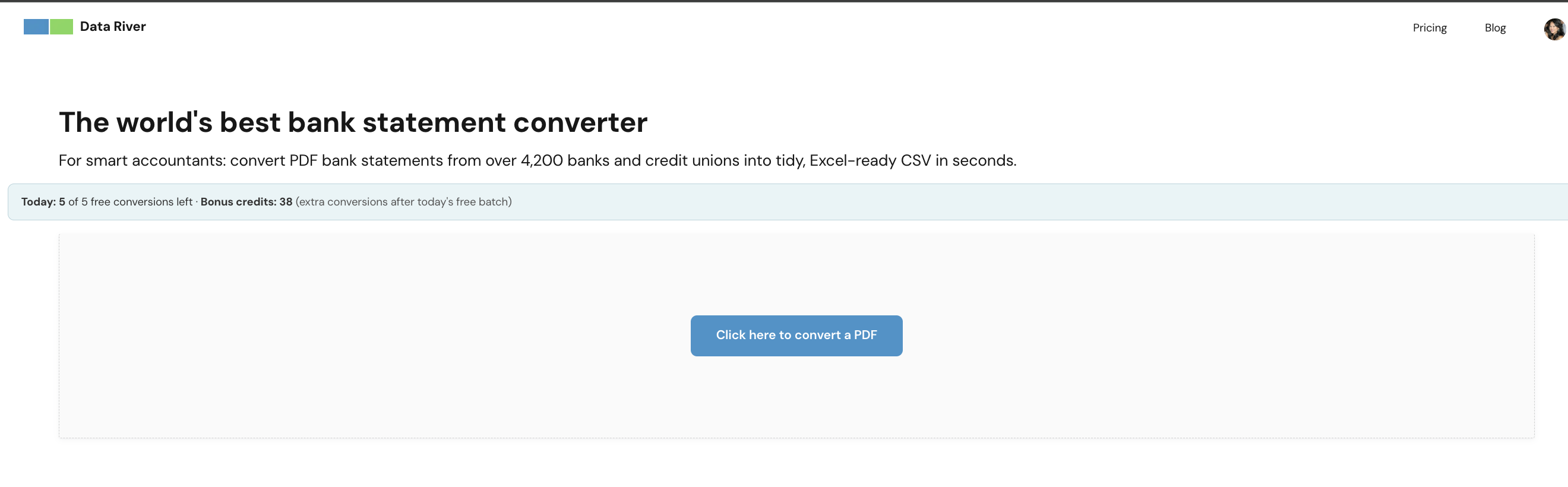
- Convert PDF statements into structured transaction data before attempting any reconciliation — manual entry doesn't scale once you're working with several months or several accounts at once
- Standardize the format across accounts and banks before reconciling — different banks export differently, and reconciling against inconsistent formats multiplies errors
- Work in batches by period, not by transaction type — reconcile January fully before moving to February, rather than jumping around, so you always know exactly how far you've got
Reconciling and correcting
- Reconcile against each relevant BAS label (G1, 1A, 1B, W1, W2) for any period requiring a BAS correction — see our BAS reconciliation guide for the label-by-label process
- Flag every discrepancy individually as you find it, rather than netting totals — you'll want the detail if the client or the ATO asks how a corrected figure was reached
- Classify each error or gap — minor variance, material error requiring formal correction, or a lodgement that was simply missed
- Keep a running list of assumptions and judgment calls — anywhere you categorized an ambiguous transaction, note why, so the client (or a future reviewer) can see your reasoning
Wrapping up and handing back
- Provide the client with a clear summary, not just the reconciled numbers — what was found, what was corrected, and anything still uncertain
- Lodge or amend as needed, or confirm the client's next steps if lodgement isn't your responsibility
- Recommend a system to prevent the next gap — this is genuinely valuable to say out loud to a client: regular reconciliation, better handover practices if they change bookkeepers again, or simply keeping their own copies of bank statements going forward
- File your working papers, including the reconstructed transaction data — useful if the same client has another gap later, or if the ATO queries the period down the track
A note on pricing this work
Reconstruction is genuinely different work from ongoing bookkeeping, and it's worth pricing it that way rather than folding it into a standard monthly rate. The volume of manual work scales directly with how many periods and accounts are involved — which is exactly why converting statements early, rather than reconciling from PDFs directly, matters for your own time as much as the client's outcome.
FAQ
How long does a typical reconstruction take? It depends heavily on the number of periods and accounts, and how complete the existing records are. A single missed BAS quarter with otherwise clean records might take a few hours; a full financial year with no prior bookkeeping can take considerably longer.
Should I reconstruct from bank statements even if the client has partial accounting software records? Generally yes — treat existing software records as a starting point to cross-check, not as ground truth, since partial or inconsistent data entry is often exactly what created the gap in the first place.
What if the client can't get statements far enough back? Most banks retain records well beyond what's visible in online banking by default — see our guide on how far back you can get bank statements in Australia for what to expect on turnaround time.
How is this different from onboarding a client who switched accountants mid-year? It's closely related — see our guide on switching accountants mid-financial-year for the business-owner side of this same situation. This checklist is the practitioner's version of that same process.
Reconstruction work is only as fast as your slowest manual step — and that's almost always converting PDF statements into usable data. Data River automates that conversion, so you can spend billable time reconciling and reviewing, not retyping transactions.

About Data River
Data River converts your bank statements into Excel-friendly sheets — no more manual re-typing of PDF statements into spreadsheets. Upload a statement and get clean, structured data ready for reconciliation, bookkeeping, or import into your accounting software.